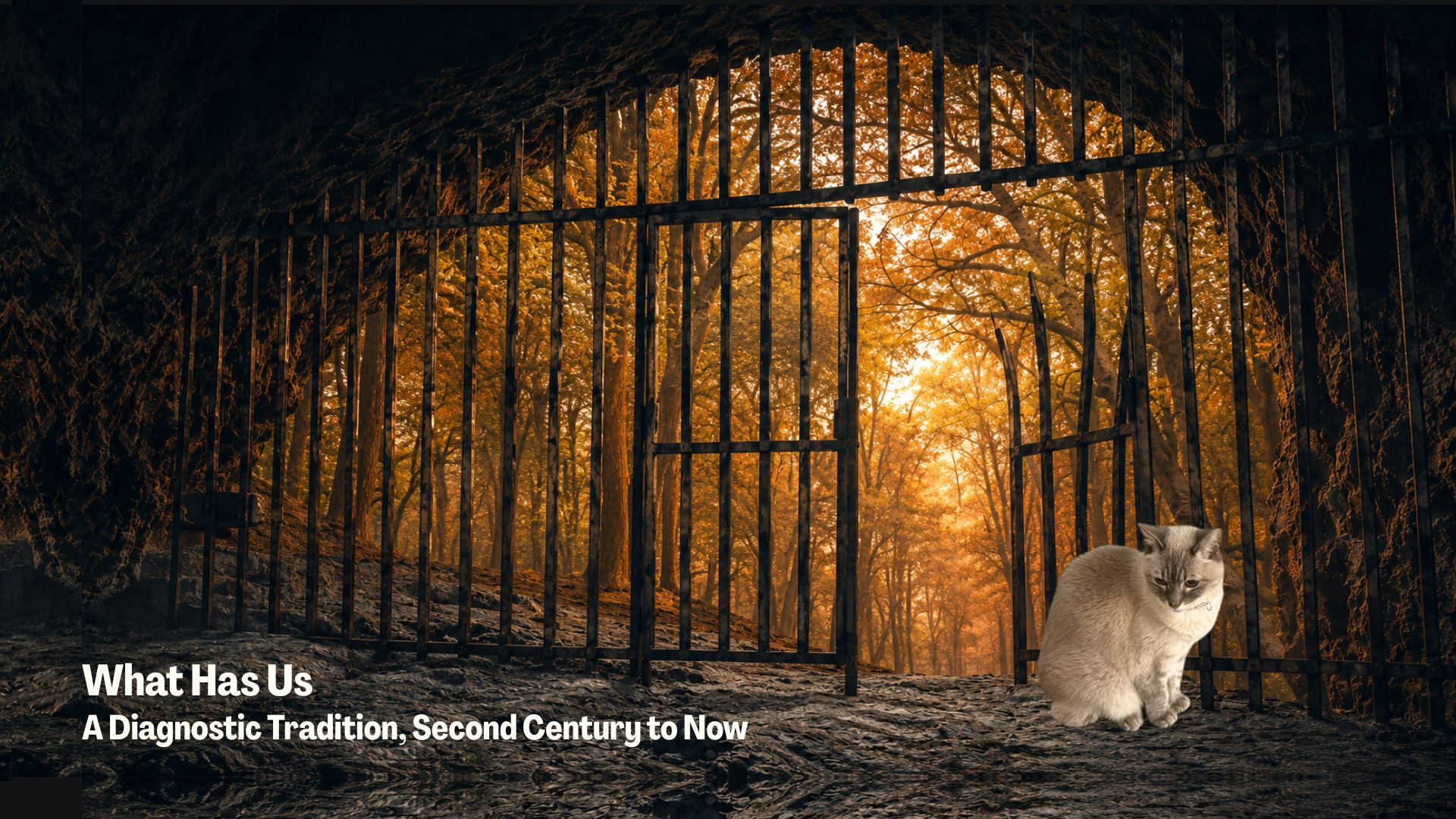
Course Introduction
Most people who arrive at this material already know.
Climate. Attention economy. Regulatory capture. Algorithmic feeds. The metacrisis. The information is there; what's missing is the language. Things register and inflame and then — poof! — dissolve somewhere between the keyboard-warrior-arguing-with-neighbors-on-NextDoor phase and the body-that-would-do-something-about-it phase.
That's where this course begins. It adds information, yes. Mostly it adds vocabulary: for what you already know by brain, heart, body, and soul, and for what you'll meet here for the first time.
The tradition is nearly two thousand years old. It goes by at least two names.
Boop University · Course Thesis
Read enough Gnosticism and you start to hear systems analysis. Read enough systems analysis and you start to hear Gnosticism. Two traditions, eighteen centuries apart, doing the same diagnostic work.
CAPT-201 · What Has Us
About This Course

The first tradition · Gnosticism
Religious communities in the 2nd-century Mediterranean — Egypt, Syria, Greece, Rome — read the same scriptures everyone else was reading and arrived at a wildly different conclusion: the world is structurally broken, the brokenness isn't accidental, and a power runs the system that wants it broken. They came up with words to name the power, the rules it operated under, and the kind of seeing that frees you (if only a little).
Heresy! declared the orthodox church. And the texts were suppressed for sixteen centuries. They would have been lost entirely except that in 1945, a farmer near Nag Hammadi, Egypt, dug up a sealed jar containing thirteen leather-bound codices that 4th-century monks had buried rather than destroy. The Nag Hammadi library lay unread for sixteen centuries. The work of Elaine Pagels, Hans Jonas, David Brakke, and others brought it back into prominence in the second half of the 20th century.
The second tradition · Structural diagnosis, now
Writers from complexity theory, game theory, cognitive science, philosophy, and ecology — mostly post-2015 — have been noticing the same thing: the structures running our civilization (markets, attention economies, regulatory systems, AI development, global finance) behave in ways the Gnostics would have recognized immediately. They produce outcomes nobody wants, nobody chose, and nobody can stop unilaterally — outcomes the systems themselves require in order to keep operating. The work is (among its many registers) a shared diagnostic project: name the structures, name the mechanism, build vocabulary so people can see what they're inside of. Daniel Schmachtenberger, Iain McGilchrist, Forrest Landry, Nate Hagens, and others.
What the course does with both
Teaches both vocabularies in parallel. The convergence — the place where the 2nd-century cosmology and the 21st-century systems analysis start naming the same machine — shows up week by week.
Diagnostic here means going under the symptom to the mechanism. Closer to what a mechanic does than what a doctor does.
And then there's the literature
Always the literature. Books doing the same work, just not calling it diagnostic work.
Dostoyevsky · The Brothers Karamazov
The Grand Inquisitor delivers a thirty-page monologue — endless and beautiful, in that oh-so-Dostoyevsky way — explaining why people are better off without freedom.
The Inquisitor tells the returning Christ: you made a big mistake. People don't really want freedom, it turns out. They want certainty, authority, food. Happy to sacrifice freedom for these things.
"OK, fine, make us your slaves. As long as you feed us" (and we have access to a streaming service or two — whatever the 16th-century equivalent was).
Make us your slaves, but feed us.
So the Church went and fixed this "terrible mistake" that Christ had made by taking all the freedom away (for the people's own good, of course — daddy's home).
The reader follows the argument and somewhere in those thirty pages starts nodding along.
That's the demiurgic argument — let me just manage all this here pesky reality for you; you go make yourself comfy — the pitch of benevolent tyranny, the pitch of the paternalistic institution, the pitch of the technocracy. "Don't you worry your pretty little head none."
The reader has been inside the demiurgic argument for a full chapter.
Kafka · The Trial
Joseph K., the protagonist, suffers across 250-ish pages trying to find someone in charge of the system destroying him. Someone. Anyone. He never does. Just procedures, offices, forms, clerks, documents — a bureaucracy with power but no center.
If you've ever screamed "AGENT!" repeatedly into your phone, or dealt with anything pertaining to health insurance, an HR portal, a customer-service chatbot that loops right back to the start, an appeals process for almost anything, a "we are experiencing higher than usual call volumes but feel free to continue to wait" hold queue, or a captcha that you have to trick into believing you're a person — you've had yourself a wee Kafka moment. Perhaps you've even thought "I get it, Luigi."
(Some recent readers have, shall we say, grown impatient with the wait.)
There's a word for it: Kafkaesque.
Camus · The Plague
Dr. Rieux refuses all the stories. He's not a prophet, not a revolutionary, not a philosopher. He keeps treating patients. Not saving the world, but showing up today, showing up tomorrow, showing up the next day. Over and over. Around him the town does denial and panic and resignation, often all at once, often in the same person. Rieux just keeps right on showing up.
Juster · The Phantom Tollbooth
Of all things. Published 1961: bored little boy Milo drives through a magic tollbooth into the Kingdom of Wisdom, which has gone ridiculous (way, way scarier than evil ever would have been) ever since the princesses Rhyme and Reason were banished. Somewhere in the journey, Milo asks something along the lines of: how come doing the right thing keeps making things worse? Whoomp. There's the diagnostic move. One sentence. Institutions functioning but failing, "metrics" improving but lives worsening, procedures followed but purposes long forgotten. Kids book.
The course teaches by encounter, repeated. The first time through, the vocabulary is foreign. The second time, it's awkward. The third time, you're using it without thinking. By the end of Loop Three, you're writing your own diagnosis in your own vocabulary, citing primary sources you found yourself. The course delivers the vocabulary and then gets the heck out of the way.
Four threads cut across all three loops: Naming (the vocabulary itself), Mechanism (how the structure operates and reproduces), Recognition (the cognitive move of seeing-through), and Witness (the act of having seen and recorded across centuries — what the Gnostic textual tradition does, what the literary canon does, and what students do for themselves in Loop Three).
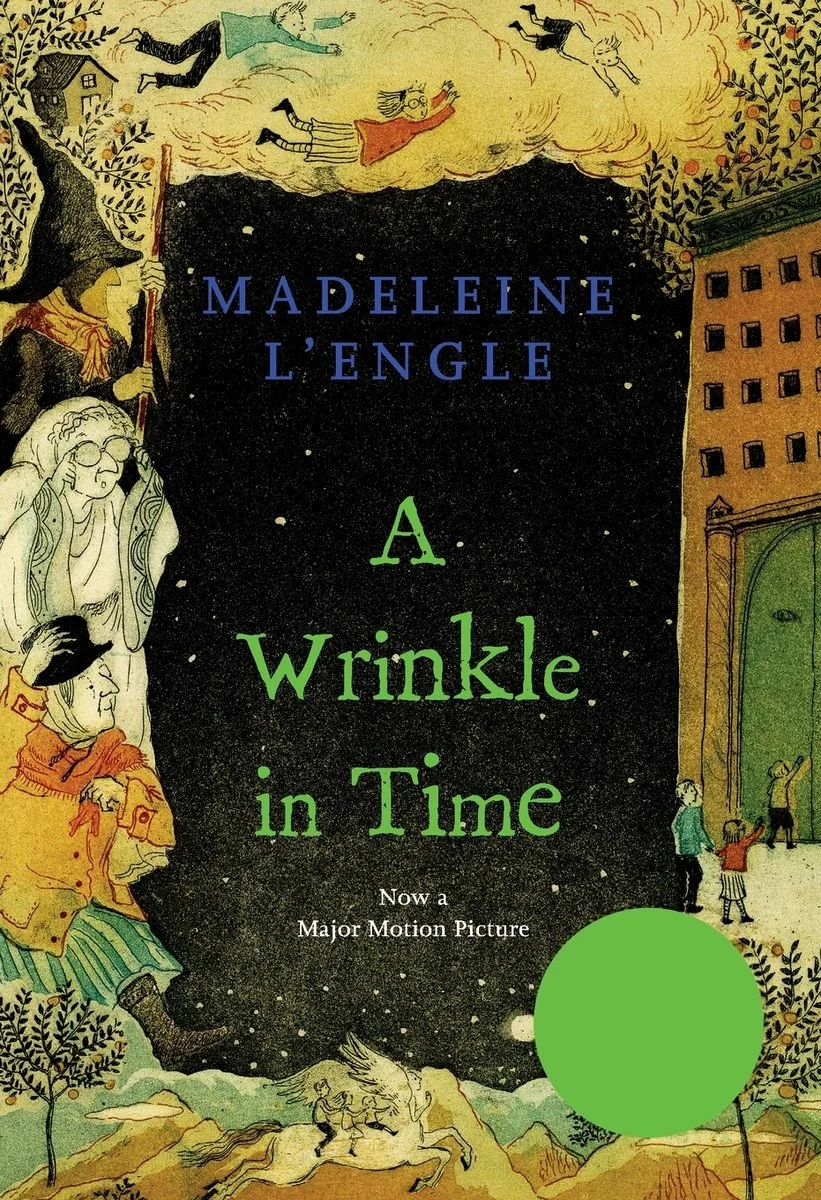
"It was a shadow, nothing but a shadow. It was not even as tangible as a cloud, and yet they could see it. It was as though the shadow had its own intelligence, its own purpose, its own — concentration. It was a dark thing, and even the dark trees of night were sand-colored against it."— Madeleine L'Engle, A Wrinkle in Time, 1962

"It's against the law to think in the Doldrums."— Norton Juster, The Phantom Tollbooth, 1961
A Note from Prof. Frannie & Prof. Moby
The reading list runs from 2nd-century Coptic manuscripts to a children's novel to engineering podcasts to mid-century European fiction. Why so wide? Because the diagnostic move is portable. Once you've seen it in five different vocabularies, you start spotting it on your own — outside the syllabus, in your own life. That's the work this list is doing.
Four Threads
Syllabus
Three loops of five weeks each. Each loop is a complete reading of the same diagnosis. In every loop, the two vocabularies show up next to novels and stories doing the same diagnostic move — in their own language.
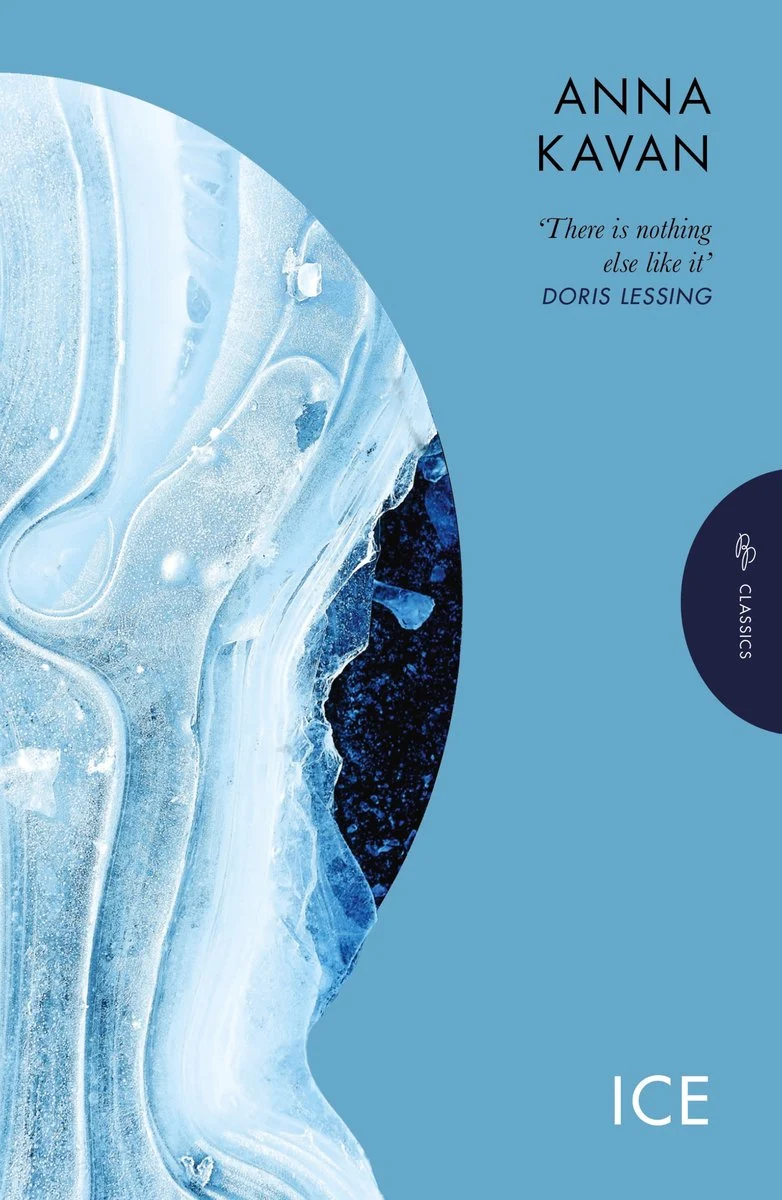
In Gnostic cosmology, Sophia is wisdom personified — one of the divine beings, originally living in the divine fullness. She tries to create on her own and produces the Demiurge from Week 2 (the flawed power that then builds the broken material world). Then Sophia falls. She fragments. Pieces of her are scattered through everything that exists.
Anna Kavan wrote Ice in 1967. An unstoppable wall of cold is consuming the world. Nobody in the book has a name. The cause is never specified. The book puts you inside Sophia's predicament: a world without the wisdom that could name what's happening to it.
Loop I Threshold Prompt
Take one piece of vocabulary from the Gnostic tradition that you can now use to name a structure in your own life or work. State the word, the structure, and what the word makes available that you couldn't say cleanly before. One page, hand-written. Take all the prep notes you want. Outline your headers while you're looking at sources. But the page itself comes from your brain, through a pen, on paper. No electronic devices for the writing itself.
To get you started. The demiurge running your firm's billing department. Sophia's fall in eight rounds of stakeholder feedback. The archons in the airport's pre-boarding announcement system. You already see these structures. The vocabulary is just what lets you say them so other people can see them too.
Loop II Threshold Prompt
Pair one Gnostic concept from Loop One and one systems-analytic concept from Loop Two that you think are pointing at the same underlying mechanism. State the convergence in your own words. Cite the primary sources. Then identify one place where the convergence breaks down — where the two traditions are not saying the same thing. The point is to be specific about both the agreement and the gap. One page, hand-written. All the prep notes you want. Headers OK to outline while you're looking at sources. The page itself comes from your brain through a pen.
 Opening · Witness as Stance


Loop III Threshold Prompt
Your Session 15 diagnosis. One page, hand-written. Name the structure you are inside of. Demonstrate its mechanism with primary sources from both traditions on the syllabus. Place yourself in the lineage of witnesses by citing one source from outside the syllabus. End with what becomes possible now that you can see what has you — but do not propose a practice. The practice work is for CAPT-301, when it exists. This course delivers you to the threshold; the threshold is where the work ends. All the prep notes you want. The page itself comes from your brain through a pen.
How This Course Connects
CAPT-201 sits between the catalog's contemplative-tradition courses and its systems-analysis courses, and it draws on the literary canon as method-demonstration throughout. The Naming and Mechanism threads run into APMA-115 (dynamical systems) and into the institutional analysis in AMST-210. The Recognition thread connects to PHIL-110 and to the philosophical anthropology in POLS-101. There is a longer thread connecting this course to legal-institutional theory — Critical Legal Studies, Lon Fuller's eight conditions, Lessig on capture — held for CAPT-202, where the same diagnostic frame gets applied to legal-institutional design.
Buy From a Real Bookstore
Every text on this syllabus is available through Bookshop.org, which sends a cut to an independent bookstore of your choice. Pick your shop. Support your neighborhood. Skip the algorithm.
Assessment
A Note on Using AI With This Course
The temptation here is to ask a model to summarize Schmachtenberger, paraphrase the Gnostic texts, condense Forrest Landry's phase-space argument, give you the gist of Kafka. The model will oblige. The summary will sound right. And you will not have read any of them, which means the recognition this course is built to deliver will not occur.
Use AI the other way around. Use it to find the source. To trace a citation. To map who quoted whom and when. To build a reading order. To remember where Hagens said the thing about generator functions. These uses route your attention toward the primary writers and thinkers the course is built on. The Witness thread asks you to take their reading practice seriously: the practitioners before you preserved this vocabulary by reading carefully. Your work is the same.
What the model cannot do is the encounter. The encounter is the course. Keep it.

Per Session
Boop Logs
One paragraph per session. What did you recognize? Where did you see it outside the reading? No summary. No recap. Just: boop.
Per Loop
Threshold Prompt
One page, hand-written, no electronic devices. Take all the prep notes you want. The page itself comes from your brain through a pen. Your analysis, your sources, your structure.
Loop Complete
Your Avatar Advances
Finish the boop logs and the threshold prompt and you're through the loop. No partial credit. No grade. You did it or you didn't.
3 Loops
Certificate of Threshold
Complete all three loops and the course is yours. A certificate is issued. Frannie signs it. Moby co-signs. The certificate names the threshold and stops there. Practice is for CAPT-301, when it exists. Until then: go find it.
Mobocoin Ledger

Learn how Mobocoin works →